Phate's Shop Build to Bring in a 5-Axis Mill!

Phate@2GFab

Grass-Roots Vendor
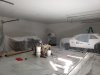
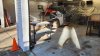
So we bought this house in 2018, and it had a 30x36 detached garage. It was just bare studs and rafters, with about 3 light bulbs. This post will get you up to speed with everything done up to winter 2024, then the rest of the thread will be about the projects I have going now.
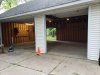
20190529_195827.jpg 20190615_114633.jpg

We insulated it and finished it out with drywall a year or so after buying. I put a small landing in the attic for a little bit of extra storage. It had a 30A sub panel, so I wired in a bunch of 120V outlets, and a couple 240V outlets.
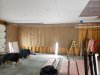
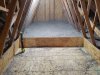
20191125_153341.jpg 20200307_180856.jpg

Apply some paint:

20200524_162814.jpg

That brings us up to ~2023, where I added a 80k BTU hanging propane heater. I have 3 100lb propane tanks behind the garage for this, because our gas meter is on the other side of the property, and I didn't want to tear up our deck and trench 200' to get gas to the garage. We also built some shelves, which are under (ish) the heater.
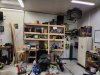
20231111_163029.jpg


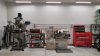
Equipment wise, I've been running a Monarch 10EE lathe and Bridgeport knee mill. I love the Monarch, it's all original from 1940 with the Sundstrand drive. It's worn, but it still cuts well within the tolerance I need for parts. The Bridgeport is pretty clapped out, but I got it for a steal. I'll be replacing it in the near future.
20201123_103942.jpg

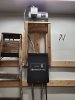
To handle the 3 phase power the lathe needs (the bridgeport was converted to a single phase 230V motor), I installed a small rotary phase converter. It's a 10hp phase converter (AD-10 from American Rotary), which can start and run the 5hp motor in the lathe (they're sized at 2x motor rating to handle start current.
20231112_145557.jpg

I also have a small bandsaw and 29gallon air compressor from Harbor Freight, a 20 ton press, and a PrimeWeld TIG welder that all get used a great deal.


So that brings us up to the current state of affairs. I'm planning on bigger things (more on that later), and that requires more of pretty much everything.

  • Electrical - My 30A panel isn't going to cut it.
    • 200A dedicated service for the garage
    • New phase converter and 3 phase breaker panel
  • Air - My current 29 gallon air compressor isn't going to keep up
    • I need a dedicated drop for the new machine, and want to pipe in a few extra drops and reel just to make life a bit easier
    • Dry air is a must!
    • New compressor with more capacity and more flow. I want to set this behind the garage on a pad to cut down on noise.
  • Concrete - 4" isn't going to cut it
I'll get into these in more detail in the following posts. Ask questions, tell me I'm dumb, it's whatever.
 
Last edited by a moderator:
Be honest you bought a garage and it came with a house.

Depending on how close the neighbors are you may want to reconsider putting the compressor outside. May need to build a closet for it on the outside.
 
Electrical!

For electrical, I wanted all I could get. Some calls to the power company and a site visit later, they told me the max I could easily get was 200A dedicated service. That should be enough for what I'm doing, so let's make it happen.

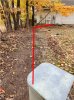
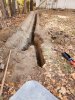
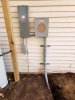
There's a distribution pedestal ~40' behind the garage, so that ended up being the easy button. I got a few quotes to get a new meter socket/main disconnect/200A panel installed and a trench dug, and got my dig permit before we started. This picture was after the socket and disconnect were installed, but before the trench. For future expandability of the garage, I planned the trench with this bend to allow a 16x20' extension on the back of the garage. [You can see the propane tanks back there, too.]

20241025_152755a.jpg

Trench:

20241027_111714.jpg

^^You might wonder why we changed direction on that trench near the pedestal. Welllll....it turns out the Miss Dig inspector mailed it in and didn't mark any utilities back there. We found the main feed to my house, lol. Whoops.

20241024_145305.jpg 20241024_142130.jpg

So there's the new hardware and the panel that won't work for me. More on that later.


3 phase!

Here's where the real fun starts. Any large machine is going to run off of 3 phase power. I have the 10hp rotary phase converter, but I want to really move some metal. With 200A single phase power, the largest RPC I can supply is 75hp. That requires a 200A feed, by itself.

With all the fancy electronics of modern CNC equipment, RPC's have become more sophisticated with voltage monitoring and balancing. I've been more than happy with my American Rotary 10hp unit, so I called them up again and ordered an ADX-75 model. It has the extra digital monitoring and balancing, as well as larger capacitance to start some really large motors.

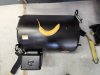
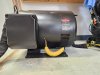
This thing is BIG. Shipping weight on the pallet was 625lbs LOL. I haven't unboxed the control panel yet, but it's here as well.

20241108_154034.jpg 20241108_154044.jpg

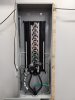
I mentioned that my new 200A panel wasn't going to work for me, and this is why. I need to feed the RPC with a 200A circuit and 4/0 wire. The panel can only accept 125A branch breakers, and it doesn't have dual lugs to pass wire. That was a huge mistake by my electrician - they didn't understand that I needed to pass a 200A circuit to this thing, so we're working on some different options. Maybe a new panel, maybe a splice box and breakered disconnect. I like the idea of a breakered disconnect so it can be locked out if I ever have service guys out for the machine, so that's probably where I'm headed.

The city is supposed to come out today to inspect the trench/socket/disconnect/panel - that's the last piece before the power company will pull the wire from the pedestal to the socket.
 
Be honest you bought a garage and it came with a house.

Depending on how close the neighbors are you may want to reconsider putting the compressor outside. May need to build a closet for it on the outside.

Yeah, really the garage/shop space was the #1 requirement, and we got a pretty sweet house that came with it.

I am planning on putting the compressor behind the shop in a sort of closet. That's to help with both space and noise. More on the air system in my next big post.
 
Air!

I think this comes down to 2 main components - the compressor, and the distribution system. I'm not planning on running any air tools outside of the CNC. That requires ~6cfm @ 90psi, and only in short bursts for tool change. I do want a couple points in the shop where I can hook up air for blow guns, and I want a reel so I can fill tires in the drive in front of the garage.

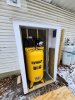
On the compressor side, I decided on a DeWalt 80 gallon unit. My decision was based primarily on noise, and it should be fairly quiet (rated at 70dB, but I have my doubts). The motor has plenty of CFM, and at 80 gallons I doubt I'll ever need it to run at a high duty cycle. The compressor will probably be here early next week. I'm planning to pour a small concrete pad behind the garage and enclose it to keep the noise down outside.

For the distribution, I've gone with a RapidAir system with their FastPipe rigid piping system. I wanted a rigid pipe system, but didn't want to deal with black pipe, and PVC sends shrapnel flying when it gives up.

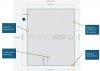
They have a pretty nice online sketch tool where you can draw the system, add the compressor and drops and define how each drop terminates, and it will create a BOM that you can add directly to the cart. So mine looks like this:

RapidAir_1.jpg

RapidAir_2.jpg

The header and drop pipes are all 3/4". One thing to say about RapidAir's online quoting is that the freight charge was crazy high - $880 to get all this shipped. I get that I'm shipping 20' long sections, but I thought that was way too much. I called them and they revised the freight cost to $330. They were really helpful over the phone, and it saved a bunch of money.


I'm going to regulate the main loop at 150psi, and the CNC will have a dedicated staged filtering system and regulator. For that, I went with Arrow Pneumatic's staged system with desiccant dryer. That has a 40 micron water pre-filter, a 0.01 micron oil filter, 1 gallon desiccant dryer, and then the regulator with 3 micron dirt filter.

I went with the desiccant dryer in lieue of a refrigerated dryer mostly because of the cost. The only place I really care about moisture is going into the CNC, and getting a refrigerated dryer large enough for just it is about 3x the cost. I'm not going to be running a multi-shift production facility, so the desiccant should last several years before I need to change it out. [The beads go from blue to pink as the absorb moisture, so it's an easy visual for knowing when it needs changed.]


So lots of things on the way, including the new machine, that should all be here next week.
 
Is there any concern of freezing up the compressor (when its outdoors) during winter time?

I read quite a bit about that before deciding to go for it, and it seems that most people never have a problem. I think with as little use as I expect for it, it won't gather much condensation. I drain my 29gallon tank about once a year and it only has a tiny bit of water in it.
 
have you thought about an auto purge on the compressor? they'll purge a little bit on their own so you don't need to worry about it. we have to worry about it. we have one at work, I still drain the compressor twice a year and had to increase the purge duration with it in the building.
https://www.aircompressorsdirect.com/Tsunami-21999-0177/p11941.html

I have looked at these, and they seem to be more affected by the cold than the compressor itself. I haven't pulled the trigger on one of those because of that feedback.
 
Look at where the drain is before you bolt the compressor down. Buddy of mine bolted his down in the garage and the feet were barely tall enough to get a hand under the tank and open the drain. Had to lay on the floor and scratch the shit out of your hand to do it.

Then of course all the water drained right towards where you were laying
 
Concrete!

Landing a large machine meant I should check into the concrete situation. When I drilled a pilot, I found 4", and that's just not going to do.

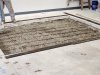
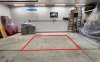
So I wanted to chop out the area surrounding the future home of this machine, and replace it with something a little sturdier. Talking to the machine manufacturer, and reading a great deal on some forums, I decided on a 12" pad, with 1/2" rebar on 12" spacing. The ground here is super solid, and the water table is way below the surface; but more mass for the foundation should yield less vibration and be less susceptible to external influences.

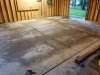
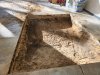
Area where this machine will live:
20241112_211242a.jpg


So we need to cut it out!

20241113_094327.jpg 20241113_094334.jpg

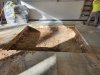
I didn't get any good pics of them laying gravel in, but this is what was happening, lol. It's ~6" of gravel:

20241113_094417.jpg

Rebar ~halfway through:

20241113_153125.jpg

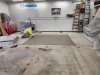
And putting on some finishing touches:

20241113_160624.jpg

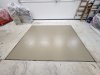
Finished!

20241113_172252.jpg


The pad actually ended up being closer to 14" concrete on top of the gravel, should be plenty :)
 
Air!

Nothing fancy here, but I got a small pad of concrete in yesterday for the compressor. I made it large enough that I can enclose it with some sound damping. It ended up ~5" thick, and should be plenty for a compressor.

The compressor and air filter/dryer arrived. The RapidAir piping is scheduled for delivery this coming Friday, and the machine will be here either Friday or Saturday (need to finalize that today).

20241117_184201.jpg 20241115_125227[1].jpg
 
Got the machine and all of its ancillaries loaded today, and its headed to my local rigger's yard. It looks like rain might prevent a delivery this Friday, but Saturday might work out!

I traveled down to get the small tooling packed up and loaded into my truck, so no progress on the shop build this week. But considering this is all for landing the new machine, we're making progress. It ended up being a LOT of tooling, we filled up my pickup truck's bed and part of the cab - all of which I need to go through once it's all back. I'll share pics of the machine and tooling once we land it!

20241119_114234.jpg
 
Last edited by a moderator:
Air!

So the Rapid Air system is SWEET! It took 3 of us ~10 hours to pipe the shop. That's about 150'of pipe, total including the drops. One of the double outlet drops was missing an O-Ring, so that prevented us from calling it "finished", but that last piece will take about 3 minutes to put up (vertical section going to the machine filter setup).

20241208_182423.jpg

20241208_182418.jpg

20241208_182446.jpg

I built a compressor shed, and insulated it with some rockwool that I had left over from another project. I did the break in procedure for the compressor inside the shop, and 2 different phones' sound meters registered ~83dB about 10' away. Not terrible, but not to the 70dB as advertised. The shed is standalone behind the shop, and doesn’t share a wall so I can isolate the noise better. The compressor is also lagged and sitting on vibration isolating feet. The power company hasn't pulled power yet, but i may run my giant 240V extension cord out there just so I can start pressure testing the system and hear how loud it will be now. Just need to get hinges on the door and finish the vents and it'll be done.

20241205_125958.jpg
 
friendly reminder to make sure that you can easily access the drain on the compressor tank before you finalize everything.
hopefully the drain is the shiny fitting that looks like it has some zip-ties on it near the one foot
 
Air!

I did a test run of the compressor with an extension cord and it was 1000000% worth the hassle of putting it behind the shop in an enclosure. It's just a low hum while running - my heater completely masks the sound and it's also pretty quiet. Just need a whip hose so I can connect the machine's air filter/dryer, and a fitting for the hose reel end and I'll be able to pressure test the remainder of the system.


I'll be getting into the electrical soon - the power company is supposed to pull power to the meter before the 13th (tomorrow) so fingers crossed. Lots of work to do there between all the panels, conduit, and wiring. I'll give a more detailed explanation of the whole system once I get into it.
 
Electrical!

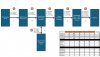
The power company came out and pulled the new lines in today! With the compressed air system close to being wrapped up, it's time to think about all of the different panels, conduit, and wires I'll be running soon. Conceptually, this is what I have going on:

Electrical_ConceptualLayout_01.jpg
*The distances have an extra 20% built in.

The 200A manual disconnect (Eaton DG224URK) is so I can cut all power from the 3-phase system. Your typical RPC simply passes the 2 hot legs through, so they remain hot even when the RPC isn't running. This disconnect has a lockout slot on it, as a bonus.

The 3-phase enclosed contactor was a purchase I didn't originally plan on. I was warned that applying voltage to the transformer as the RPC started could damage it, and that some sort of switch needed to be in-between them. Manual switches are an option, but I will more than likely forget at some point. The enclosed contactor does this automatically - it monitors the 3 phases and only latches when all are present and balanced. If you lose a leg or shut down the RPC, it automatically unlatches. It also has overload protection and will unlatch in the case of exceeding the setting (set to the FLA of the biggest motor).

I did know going in that a transformer might be required. This machine requires 400V, and is rated at 34kVA, so I got a 45kVA transformer as that's the next largest off-the-shelf option, and it is both isolating and delta to wye. This machine needs a neutral for the controller electronics. This is another fairly large piece of equipment that I need to land somewhere, and it weighing ~400lbs complicates it a bit. It should be here today, though.


And I won't say exactly what it is just yet, but we landed the machine :)

 
Last edited by a moderator:
Back
Top