
Navigation
Install the app
How to install the app on iOS
Follow along with the video below to see how to install our site as a web app on your home screen.
Note: This feature may not be available in some browsers.
More options
Style variation
You are using an out of date browser. It may not display this or other websites correctly.
You should upgrade or use an alternative browser.
You should upgrade or use an alternative browser.
Signs of excessive backpressure?
- Thread starter brandon19
- Start date
- Watchers 4

Enki
Moderator
Actually, try dropping your gap to .024 first. Step colder really *shouldn't* be an issue on pump gas, but it still might be. Much easier to just tighten it up a touch and see if that helps before going to throw some money at it. Also, inspect both your current plugs as well as any new ones to verify they aren't counterfeit:
Bunch of these vids around.
Also, as for the logged effect of misfires, I honestly don't remember. Its been years.
Bunch of these vids around.
Also, as for the logged effect of misfires, I honestly don't remember. Its been years.
brandon19
Greenie Member
Alright, so I tried 0.024" gap and the misfire / break up still happened.
I tried the OE plugs again (ILTR6A-8G) and it was still there.
I can get clean runs, more common in 3rd and 4th gear, but in 1st and 2nd gear the misfire is a lot easier to reproduce and once again seems to always happen when IDC jumps / gets close to 100%.
Because above the 6000RPM mark it is easy to get the IDC into the high 90s, I think that is why I am noticing the misfire up there a lot and it is making me believe its something else when I simply just don't have the injector room for what I am trying to ask for up top.
Edit: I verified that all plugs were legit too.
I tried the OE plugs again (ILTR6A-8G) and it was still there.
I can get clean runs, more common in 3rd and 4th gear, but in 1st and 2nd gear the misfire is a lot easier to reproduce and once again seems to always happen when IDC jumps / gets close to 100%.
Because above the 6000RPM mark it is easy to get the IDC into the high 90s, I think that is why I am noticing the misfire up there a lot and it is making me believe its something else when I simply just don't have the injector room for what I am trying to ask for up top.
Edit: I verified that all plugs were legit too.
Enki
Moderator
Was it like this? Specifically first gear:
To this day, I have no idea what that was; only happened with the AP and only in the lower gears. Didn't hit any limits either.
I wonder if you have the 20%/80% max fuel table set. I want to say it's a fueling related table with a single cell in it that's either 80% or 20% by default and needs to be set to either 100 or 0, but again, I don't remember which. I'd probably recognize it if I saw it though. Not having that modified absolutely fucks with your fueling above 80% IDCs on the AP.
To this day, I have no idea what that was; only happened with the AP and only in the lower gears. Didn't hit any limits either.
I wonder if you have the 20%/80% max fuel table set. I want to say it's a fueling related table with a single cell in it that's either 80% or 20% by default and needs to be set to either 100 or 0, but again, I don't remember which. I'd probably recognize it if I saw it though. Not having that modified absolutely fucks with your fueling above 80% IDCs on the AP.
brandon19
Greenie Member
Nah wasn't like that, it is more so 1 or 2 quick hesitations after the other rather than a limiter one. However, in that video my MPS 3 BK use to do the same thing, disabled my SWAS and never happened again.
Can you elaborate more on what you mean by 20%/80% max fuel table?
Here are the tables I have in fueling.
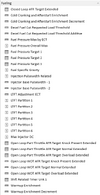
Can you elaborate more on what you mean by 20%/80% max fuel table?
Here are the tables I have in fueling.
brandon19
Greenie Member
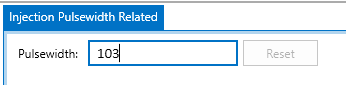


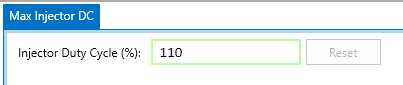
From my understanding the Injection Pulsewidth and the Base tables are new which are used to calibrate for different injector sizes when they come out.
Edit: Actually I have just noticed something. Near higher RPM my fuel rail pressure gets in 2050-2100psi range. But this seems to only happen more often in 1st and 2nd. Is there any cut related thing if the fuel rail pressure is too high?
Last edited:
Enki
Moderator
That...actually may be your issue; you might be momentarily pegging the sensor, causing either the injectors to fail to open or the ECU to cut fuel on a cylinder. Are you aware of how our fuel system works in this regard?
Recommend setting the fuel pressure targeting stuff back to stock.
Edit: Do you have a higher than stock PRV?
Recommend setting the fuel pressure targeting stuff back to stock.
Edit: Do you have a higher than stock PRV?
Enki
Moderator
Correct. In a PI system, the flow is static for both the injectors and (electric) fuel pump at 100% IDC regardless of RPM.
In DI, RPM increases fuel flow requirements, but injection window goes down. I've never done the math on actual fuel flow through the injectors vs RPM @ 100% duty cycle, so not sure if that can change or not. I may look into it when I'm less mentally exhausted.
In DI, RPM increases fuel flow requirements, but injection window goes down. I've never done the math on actual fuel flow through the injectors vs RPM @ 100% duty cycle, so not sure if that can change or not. I may look into it when I'm less mentally exhausted.
brandon19
Greenie Member
Yeah okay gotcha, because there is more fuel flow does that mean it has to work harder to relieve pressure as RPMs increase?
Edit: I made the changes but sadly no difference. However, I may have found something else. I did a 1st to 4th gear pull and top of 2nd and top of 3rd I felt the hesitation. Now looking through the logs at those points to see if I see anything off and I noticed the WGDC at these exact points drop down and back up but what I don’t get is load is smooth and boost looks normal. Otherwise there was nothing else obvious.
Edit: I made the changes but sadly no difference. However, I may have found something else. I did a 1st to 4th gear pull and top of 2nd and top of 3rd I felt the hesitation. Now looking through the logs at those points to see if I see anything off and I noticed the WGDC at these exact points drop down and back up but what I don’t get is load is smooth and boost looks normal. Otherwise there was nothing else obvious.
Last edited:
Crazycanadian
Greenie Member
Could you post your Tune file to look at?
Have you looked into back calculating Fuel flow using the Fuel injection amount pid?Correct. In a PI system, the flow is static for both the injectors and (electric) fuel pump at 100% IDC regardless of RPM.
In DI, RPM increases fuel flow requirements, but injection window goes down. I've never done the math on actual fuel flow through the injectors vs RPM @ 100% duty cycle, so not sure if that can change or not. I may look into it when I'm less mentally exhausted.
brandon19
Greenie Member
They were about 96-97%What about IDCs?
I have got them set at 3 while testing this stuff out.Edit: You know what? Try setting your load limits (overall) to .15 higher than what you're commanding.
I have attached the tune here. (I started playing around with initial and incremental load corrections last night, they are the only thing I have changed that I haven't tested yet)
It is worth saying that I have my EWG plumbed so it always has pressure at the base and the boost controller is routed to apply pressure to the dome of the wastegate. What this means, is I need boost to generate higher boost so it can be a bit touchy to tune and needs smooth WGDC changes to be clean. So I was thinking, if I zero out the initial corrections because I believe that is what is doing the erratic changes and then tune the incremental so it'll smoothly adjust the WGDC to reach the target load.
In saying that, do any of you guys know the logic behind how the initial and incremental load corrections work? Is it like every 0.1 seconds it will apply the initial correct AND incremental correction, except the initial isn't cumulative and the incremental is?
Last edited:
Enki
Moderator
Not sure what the timing is, exactly, but it's pretty quick. I once deleted my intercooler and did a third gear pull on a cool night (hot day) and it spooled, despooled, respooled, despooled and then launched before the car even visibly increased speed. Wish I still had that video, sounded very strange. I since learned to pull back on my comps being so aggressive. It may very well apply a correction every "cycle" that it checks the values, which may be Mhz fast; not sure on the initial vs incremental changes though.
I don't think that's your issue, however.
I don't think that's your issue, however.
Crazycanadian
Greenie Member
I believe initial is like the starting point for the correction its going to make. Incremental would be the slope/or how fast it's going to ramp in the change. I also believe the computer calculates this based on what it anticipates will happen, it doesn't wait until things happen to act.
Similar threads

- Replies
- 14
- Views
- 2K


- 0.00 star(s)
- Replies
- 28
- Views
- 5K
- Replies
- 8
- Views
- 11K
